Living in the Sunniest City on Earth: What It Means for Your Yuma Cooling Bill
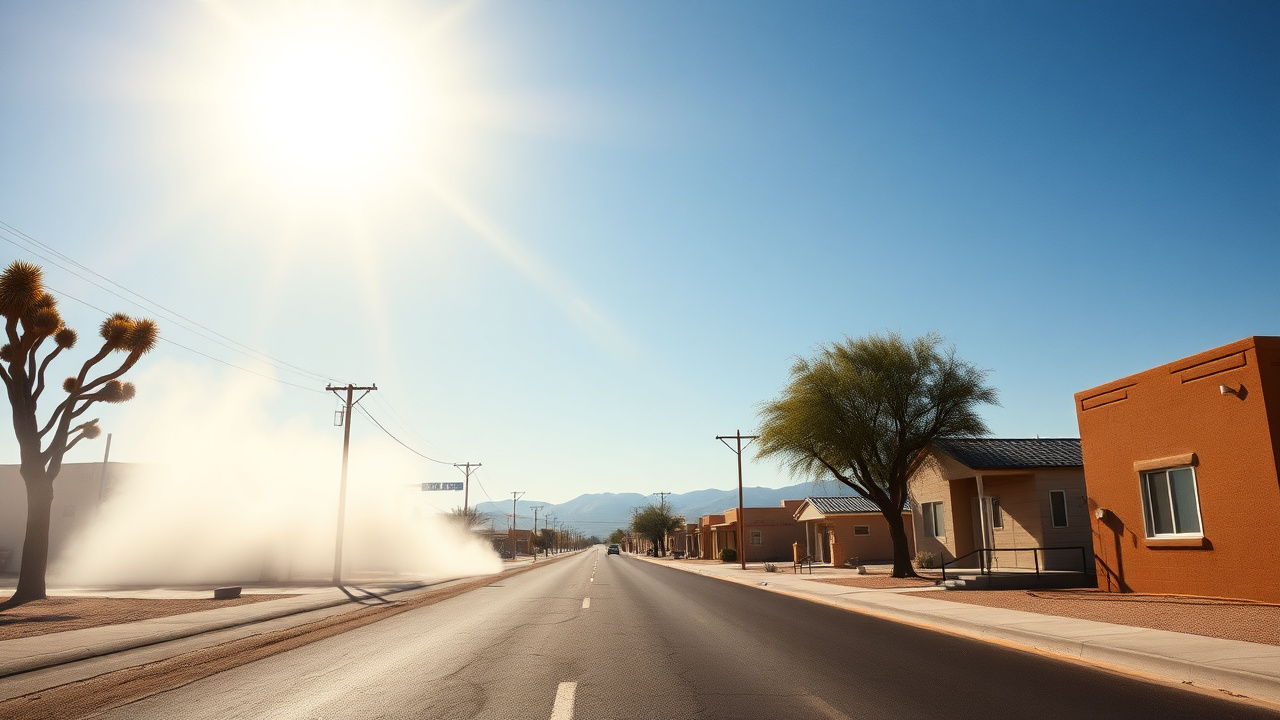
Yuma holds the Guinness World Record for sunniest city on Earth, averaging more than 4,000 hours of sunshine a year — about 90% of all possible daylight hours. That's not a marketing line, it's a measurable climate fact, and it's the single biggest reason a Yuma home's roof and attic take a more sustained heat beating than almost any other house in the country.
What 4,000+ hours of sunshine actually does to a roof
Every one of those sunshine hours is radiant energy hitting the roof deck directly. In a home with adequate, air-sealed insulation, most of that energy gets stopped before it reaches the living space. In a home with thin, settled, or gap-riddled attic insulation — common in older Yuma-area housing stock — a meaningful share of it moves straight through the ceiling, and the AC has to work continuously through the afternoon and evening to offset it.
Why Yuma is a cooling-driven climate, not a heating one
IECC Climate Zone 2B, which covers Yuma, is defined by cooling degree days far outweighing heating degree days — Yuma sees roughly four times as many cooling degree days as heating degree days across a typical year. That's the technical way of saying: almost all of a Yuma home's HVAC energy budget goes toward fighting heat, not keeping it in. Insulation strategy has to follow that reality. R-value guidance borrowed from a colder climate, built around keeping heat inside a home, solves the wrong problem here.
Why air-sealing matters as much as R-value in Yuma
R-value measures resistance to heat conduction through a material. But a huge share of unwanted heat gain in a leaky home doesn't move through the insulation material itself — it moves around it, through gaps at duct boots, top plates, wiring penetrations, and the attic hatch. Fiberglass batts and blown-in insulation don't seal those gaps; they just lie across or around them. Spray foam expands to fill and seal those same gaps in the same application that provides the R-value, which is why it performs differently in a climate with Yuma's specific heat-load profile.
What this means for your specific home
If your upstairs rooms run noticeably hotter than the rest of the house, if your AC seems to run nonstop from May through September, or if you've never had your attic insulation assessed since the home was built, Yuma's climate math is almost certainly working against you more than it needs to. The fix isn't a bigger AC unit — it's stopping the heat before it gets in.
Frequently asked questions
Yes — Yuma holds the Guinness World Record for sunniest city on Earth, averaging more than 4,000 hours of sunshine annually, roughly 90% of all possible daylight hours in a year.
Yuma, Phoenix, and Tucson all share IECC Climate Zone 2B and similar DOE attic R-value guidance (R30-R49), so the target R-value range is comparable. What changes is the sustained sun exposure Yuma's roof decks and walls absorb, which is why air-sealing — closing the gaps that let heat infiltrate regardless of R-value — is especially important to get right here.
Ready for a free quote?
Tell us about your home and we'll build a clear, no-pressure quote.